“They met online. He was playing on the Xbox, and he met her on some game that
they both played. He decided Ksenia was the one. That was it. Nothing else
mattered and he was going to be with her.”
It could be the start of a romantic story – a toast at a
wedding, perhaps. Except Valerie Stobbart, the mother of the 27-year-old
electrician who had turned his life upside down to move to
Russia to be with his new
girlfriend, didn’t get to make any such toast.
For Valerie, it was the start of a nightmare. But in a
Kafkaesque twist, that nightmare has been compounded by her being sacked from
her job with the
Home Office simply for
trying to find her son.
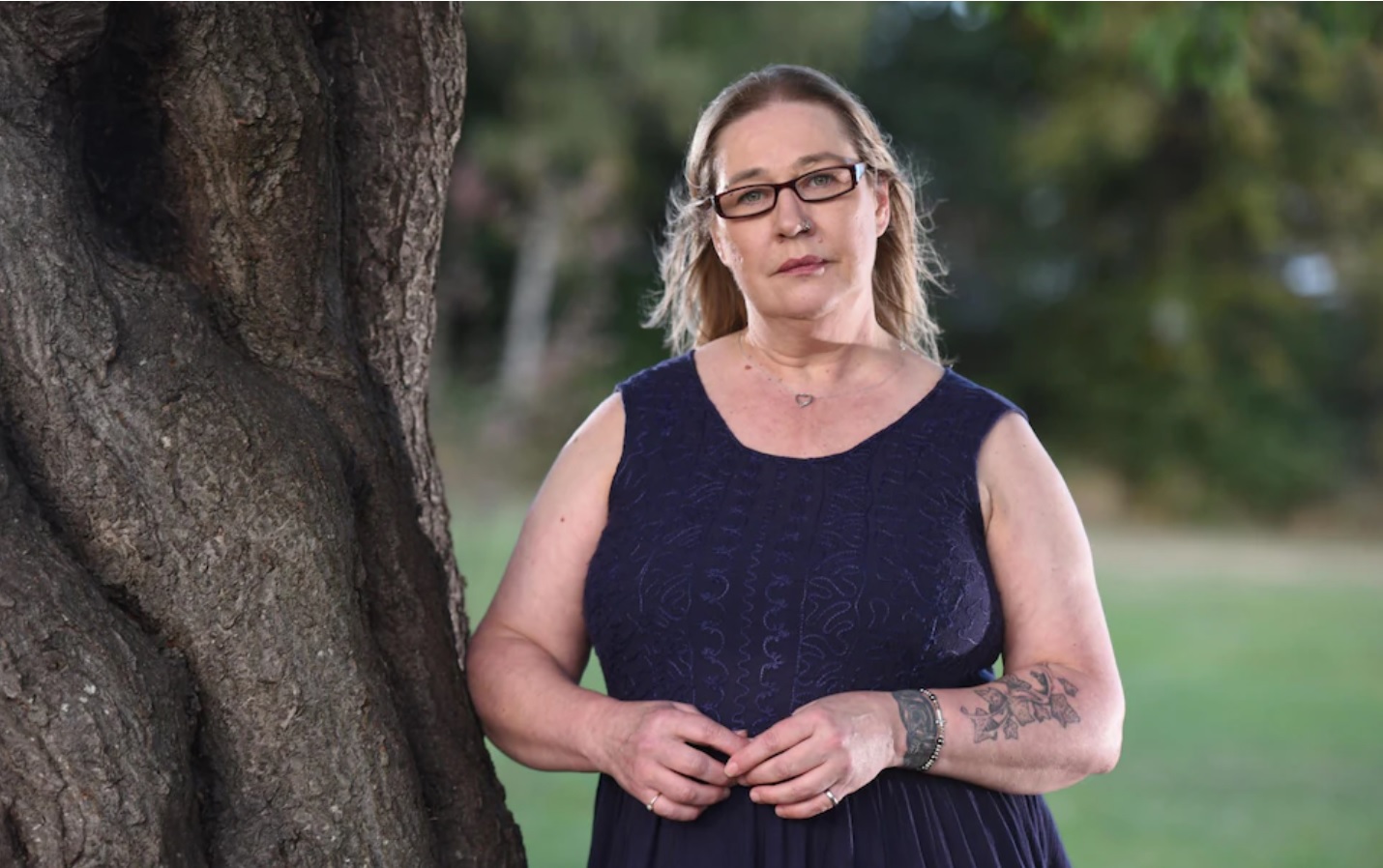
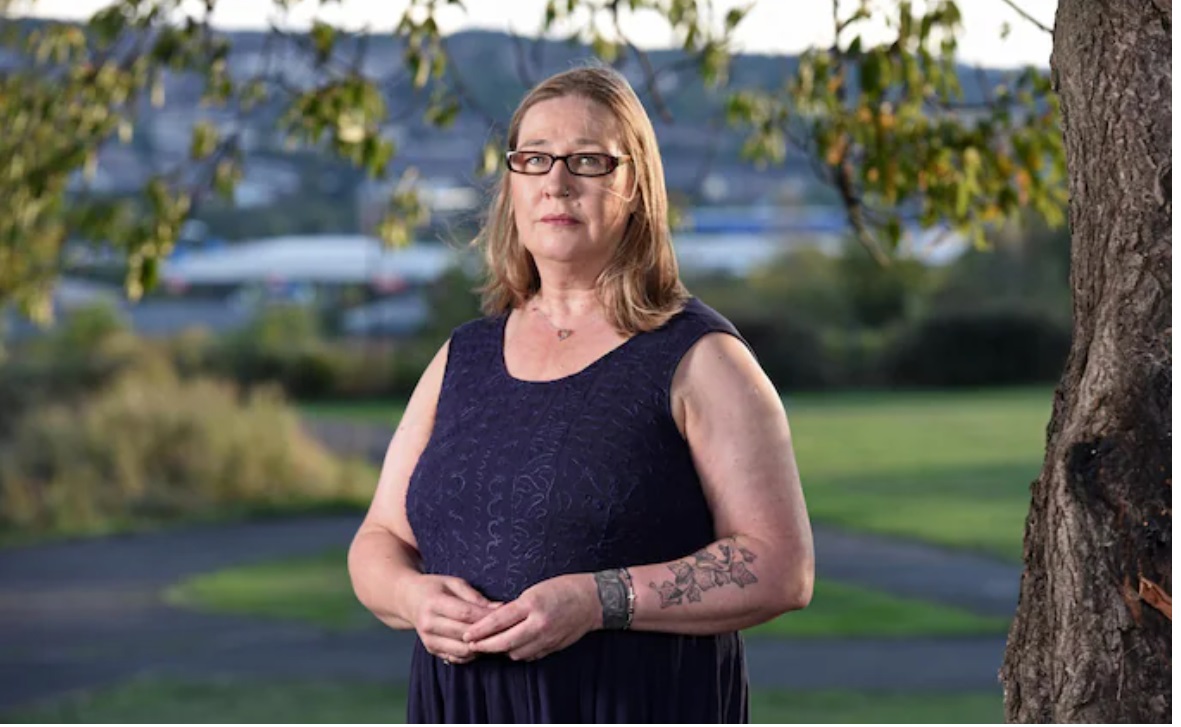
“He could be a right pain in the backside, but also really good fun,” Valerie,
57, tells me. “Sporty, he just loved life. He’s fiercely loyal to his friends
and his family.”
A Russian romance
We meet in Valerie’s home, a busy house on the edge of Newcastle’s city centre,
that just about contains the paraphernalia of a life devoted to people and pets.
“Nathan is hugely egotistical. Very opinionated and very clever,” says Valerie.
“He’s good at everything he puts his mind to. Just a nice guy. He’s a nice guy.”
Having messaged through an online game, Nathan and Ksenia met in person for the
first time in early 2024, when they arranged a holiday in Turkey. He was
smitten.
“He came home and said that was it – he was going to be with Ksenia,” Valerie
recalls. “He made an appointment at the Russian embassy to get himself a visa
and went.”
In summer 2024, Nathan drove to Russia to visit
Ksenia in her small village a couple of hours outside St Petersburg. It was more
than two years after
Russia’s invasion of Ukraine,
and with diplomatic relations between the British and Russian governments
extremely strained, was Valerie nervous when Nathan crossed the border?
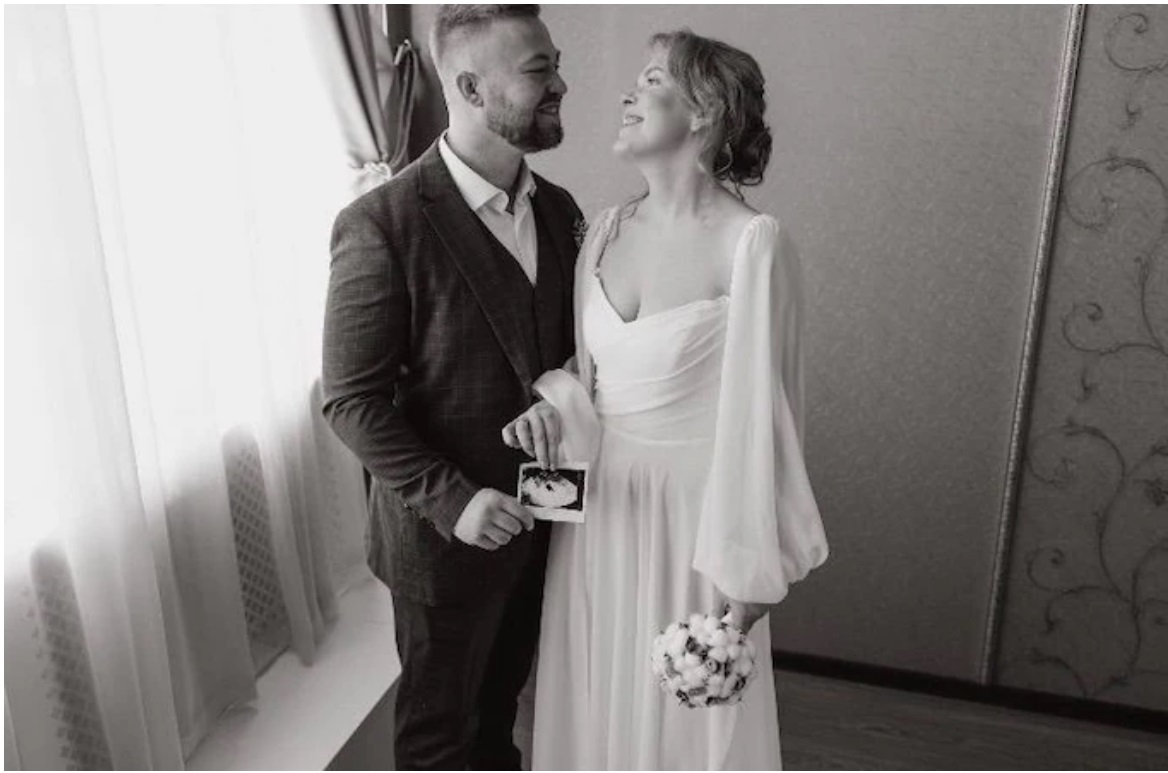
Nathan and Ksenia were married in February 2025, less than a year after he moved
to Russia
“I remember him saying that there were soldiers with guns, and they had him up
against the wall, asking him what he was doing there. He said that was a bit
scary. He was sort of like, ‘I’m here to visit my fiancée. I’m not here to do
anything else.’ He said that was fine.”
He sent Valerie pictures of a derelict bungalow he was going to renovate with
the help of Ksenia’s father, a builder, and neighbours in the village. He stayed
for a few weeks before returning. Ksenia, a year older than Nathan and a widow
with three children of her own, worked mostly from home as an HR manager. She
visited Nathan’s home in Newcastle soon after.
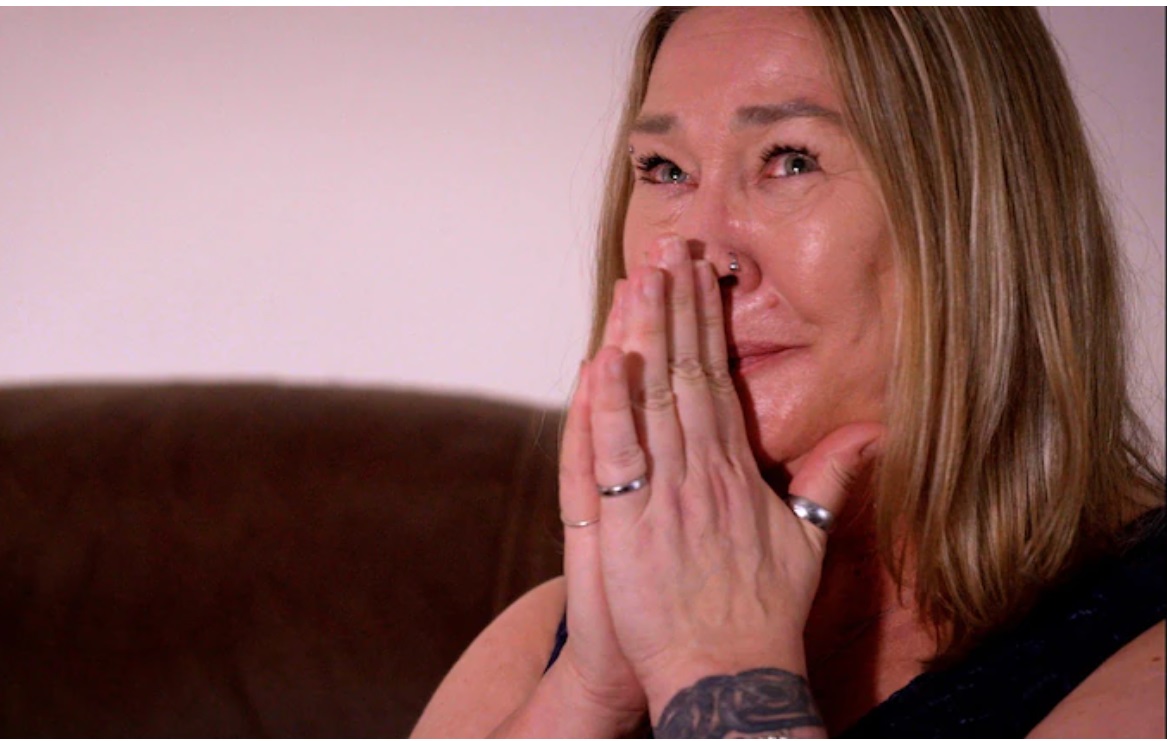
“I liked her,” says Valerie, her face brightening. “They went sightseeing around
the country for a little bit. She was just a normal, nice girl. They were going
to get married. They were going to have children. He was learning the language
because he wanted to be able to work as an electrician over there.
“[I was] not massively happy about it. However, this was Nathan’s decision. This
was the woman he wanted to be with. She was a nice girl. How do you stop an
adult from doing what they want to do?”
A surprise pregnancy
Nathan returned to Russia to live with Ksenia permanently on Christmas Day in
2024.
“I don’t think we ever discussed the war because it didn’t have anything to do
with them. You know, they were living in a little village. The war had
absolutely nothing to do with them at all. I did ask if it was dangerous at one
point, and Ksenia said: ‘No, it’s not. The fighting is miles and miles away, and
it’s got nothing to do with [us].’ I wasn’t overly happy about them going to
Russia just because of the distance it was, but I thought: ‘We’ve got FaceTime.
We can chat.’”
Nathan quickly settled into life in Russia. He found work as an electrician, got
on well with his colleagues and was managing with the language. “Everything was
just fine up to that point,” says Valerie.
Then, in early 2025, Nathan sent his mother a photo of two suits, asking which
she preferred. She was bemused. What was the suit for?
Nathan and Ksenia were married in February 2025. Valerie tells me she felt a
pang of disappointment that she hadn’t been involved or able to attend.
Regardless, she was delighted for her son, and congratulated him and his new
wife. She told him they both looked beautiful in the photographs.
“He said: ‘You need to look closer.’ When I zoomed in on the photographs, they
were standing with a scan picture,” Valerie recalls.
Ksenia was pregnant.
“That was a massive shock. I thought: ‘My God, not only have I now got a
daughter-in-law, I’ve now got a grandchild on the way, which is my first and
only grandchild.’ It was a bit of a shock but, again, it’s what he wanted to
do.”
It had been a tumultuous and emotional few months. Perhaps as a result of the
stress of it all, Valerie and Nathan had a falling out and didn’t speak for some
time. Ksenia sent regular updates on the pregnancy, but as summer turned to
autumn in 2025, the lack of contact with her son started to weigh on Valerie’s
mind.
“I remember at one point asking Ksenia what he was doing and where he was
working,” Valerie says. “She was very evasive, and I said: ‘Look, where is he
working? What is going on?’ She just said: ‘Oh, he’s an electrical contractor.’
Thinking back now, in hindsight, that was a big red flag. I should have been
questioning a bit more. I didn’t, and months rolled on. The next thing, [Ksenia]
sent me a message asking if I could please speak to Nathan again because she was
in labour.”
Michael was born on Oct 1 2025. Soon after, Valerie messaged Nathan to offer
congratulations. He replied positively and started sending his mother pictures
of her grandson. However, Valerie soon began to feel something was not quite
right. Nathan was sending photos that Valerie had already received from Ksenia,
sometimes weeks earlier.
“I thought: ‘If I’m going to ask you for some more photographs of the baby, why
are you not sending me photographs of the baby now? You’ve just sent me
photographs of the baby [from] two weeks ago. I thought that was a little odd,”
says Valerie.
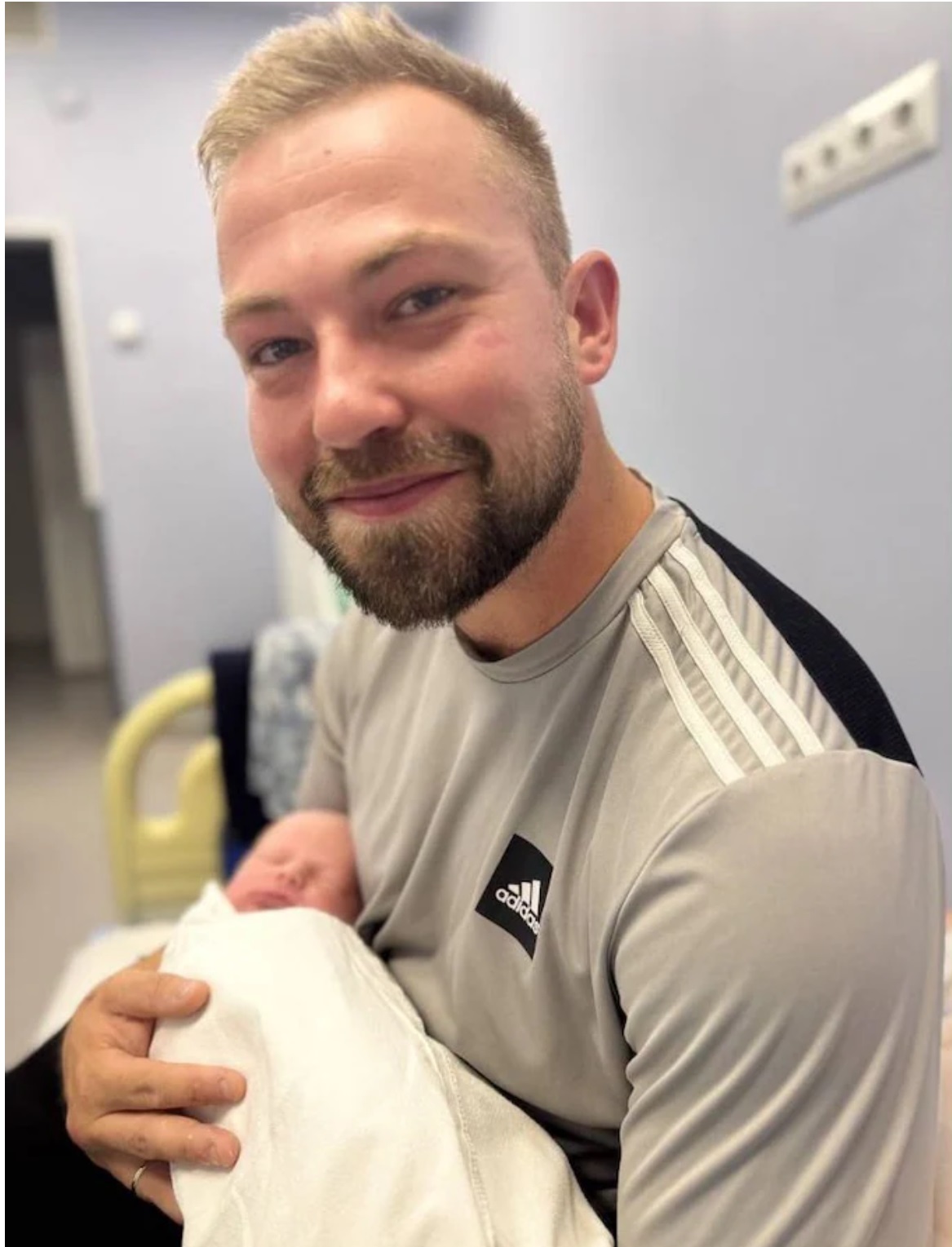
After a tumultuous period, Nathan’s son, Michael, was born in October 2025
A chilling ultimatum
We are talking in Valerie’s living room, late on an August afternoon, and the
fierce heat of Britain’s summer is still with us. The setting sun blasts in from
a west-facing window, illuminating a guitar next to the sofa. Nathan’s, it turns
out, still waiting to be picked up again.
Valerie pauses before continuing her story.
Midway through December 2025, like many people up and down the country, Valerie
was preparing for Christmas. On December 17, she and her partner had dressed up
as Father Christmas and his wife for a local charity event, after which she had
dropped off presents to family members.
It was at one such stop, around 7.30pm, that Valerie received a text message
from Ksenia that changed her life.
“Ksenia said she needed to tell me something,” Valerie recalls. “She said she
had been sworn to secrecy by Nathan, but [the Russian authorities] had changed
legislation and refused his visa when he had applied to stay after they got
married. They had said he could stay in Russia, but only if he signed a year’s
contract for the army.”
The Russian army – at this point heavily
committed, but bogged down fighting in Ukraine – had lost thousands of
armoured vehicles to Ukrainian anti-tank missiles and other weapons.
Most movement and fighting were now done by poorly equipped and highly
exposed infantry soldiers on foot, and the men were increasingly being
picked off by drones that had come to dominate the “kill zone” at the
front.
Valerie was shocked, but Ksenia then
delivered the even more devastating news that Nathan was missing. He had
last been heard on his military radio on December 10, a week earlier. A
voice on the radio, somewhere in Ukraine. Then, nothing. His unit had
declared him missing in action on December 12.
Valerie’s world turned upside down and,
with neither woman having a good grasp of the others’ language, she and
Ksenia had to rely on the translate function on their phones to
communicate – a protracted and harrowing process.
Through a tortuous method of copying and
pasting text into a translation app, Valerie discovered that Nathan had
agreed to join the Russian army in April 2025 rather than be deported.
With three children – four now, with Michael – he and Ksenia hadn’t had
the money to pay for visas and a new life in the UK.
“I said to her: ‘I would have done
anything to help you do that.’ We would have all rallied around and
managed however much money it was. I think at that point, Nathan was
thinking he needed to stay in Russia with her, and the only way he could
do that was to sign this contract. I feel like they didn’t give him an
option. It was a case of either sign the contract or get deported. So at
that point, they had threatened him with being deported. And he signed,”
says Valerie.
Valerie then understood that the reason
Nathan had been sending out-of-date photographs of the baby was that he
hadn’t been at home. He had been serving somewhere in the Russian army
and could not send new images of him holding his son.
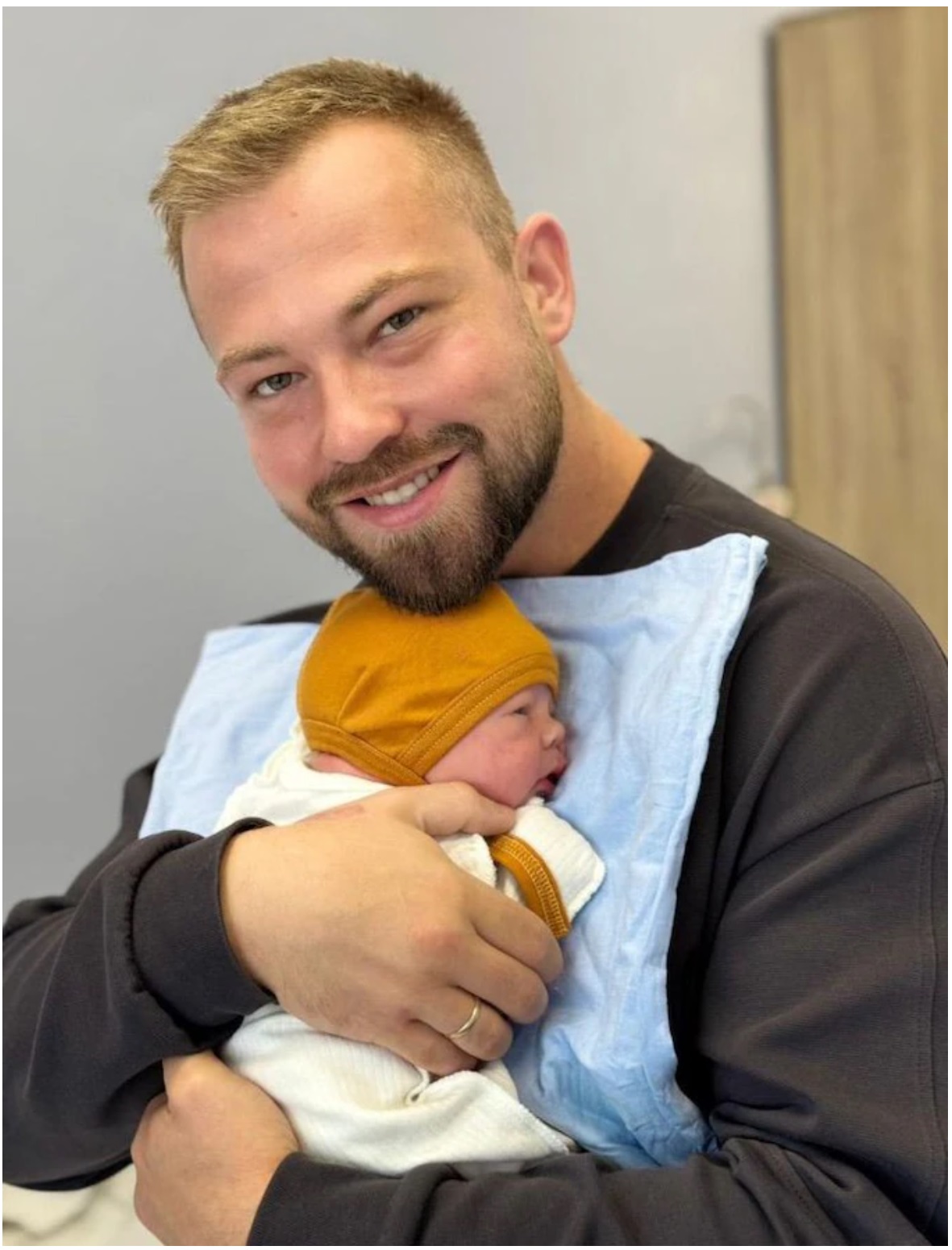
Nathan had been granted just a few days’
leave when Ksenia was in labour – enough time for a few quick snaps with
baby Michael before he had to return to the front.
Nathan was granted just a few days’ leave from the
Russian army when Michael was born
Nathan was granted just a few days’ leave
from the Russian army when Michael was born
“I wish he had said because I
would have done anything to bring them all back,” says Valerie.
“But he wouldn’t leave her, and he wouldn’t leave the children.
I think he just thought that he was invincible. You sign up for
a year, they’ll give you a passport and you’ll be able to carry
on living there.
“Ksenia said her heart was broken. I had an awful lot of questions like, ‘Why
did you not tell me? How did we not know?’”
Ksenia tried to find out where Nathan was, but all the Russian authorities would
say was that such information was classified. “We got absolutely no information
from the Russians at all,” says Valerie. “They’ll tell us absolutely nothing.”
A mother’s desperate search
Desperately, Valerie appealed to any organisation she thought might be able to
help, including the Russian and Ukrainian embassies, the Red Cross, and the
British Foreign Office. All to no avail.
“The minute you mention Russia, everybody immediately clutches their pearls and
backs away in shock,” she says.
In those first frantic weeks, Valerie and Ksenia messaged each other three or
four times a day, hoping the other had new information.
“Somebody eventually got back to me from the Red Cross and said that they would
give me a caseworker,” says Valerie. “I went through an interview with them, and
they put him on a list so that they can check names to see if he was anywhere.
At first, you have this belief that they’ve got his name now, and they’re going
to find [him]. But the days roll into weeks and the weeks roll into months. And
here we are, still no further forward at all.”
‘It’s hard to get any help from anybody. You say the word
‘Russia’, and nobody wants to know,’ says Valerie
The Foreign Office in London similarly assigned a caseworker to Valerie, but the
Government had no information to offer. The gaps between calls grew longer as
the months went on, to the point where the caseworker now only calls to see
whether Valerie has heard any news (they emailed in this vein on the day of our
interview). Ksenia, similarly, has heard nothing from the Russian army.
“I emailed the Foreign Secretary about five or six times.
She [Yvette
Cooper, when in the appointment] ignored me as
well. It’s hard to get any help from anybody. You say the word ‘Russia’, and
nobody wants to know.”
As well as exchanging prisoners of war, the Ukrainian and Russian governments
occasionally arrange for bodies of the fallen to be returned. Valerie kept
hoping that she would hear Nathan had been exchanged or, at the very least, that
his body had been found.
“We watch the body exchanges. They have his DNA, from the baby, in case there
are any matches, [but] there are no matches, and there’s no body. I don’t know
whether that means it’s good that he could still be captured. I read stories
about soldiers who have turned up after a year, who’ve been helped out by
Ukrainian families.
“I think while there is no news, there’s still a bit of hope there,” she says.
A
Telegraph investigation
In April 2026, I went to Ukraine to report on a prisoner-of-war camp in western
Ukraine. The prison population of about 600 included foreign fighters who had
travelled to Russia to sign up as soldiers. The vast majority of prisoners were
Russian, and most of the foreign fighters were from African countries, but there
was also a Cuban and a man from Czechia. Although British citizens were not
present when I visited, the prison had – as I said in my report – occasionally
held British citizens who had been captured fighting for Russia.
Valerie saw my report. In her desperation, and having heard nothing through
official channels, in May 2026, she sent me an email.
From:
Valerie Stobbart
Sent May 28 2026
To:
Dom Nicholls
Hello Mr Nicholls,
I have recently watched your videos and wanted to ask for
your help.
My son is a British citizen, fighting for the Russian
army and is missing in action.
Let me give you some background before you write us off.
[...]
He went missing on 12/12/2025. This was apparently the
last time he was heard on the radio. We don’t even know where he was.
The Russian army will tell us nothing.
I obviously contacted everyone I could: the Red Cross,
the Foreign Office, the Russian embassy and the Ukraine embassy. But we
have nothing, no news, no information, nothing.
Nathan was made to sign up, or lose his new wife and
baby. He spent two weeks with his new baby and was sent straight back to
training.
I need help. I need answers, anything. The ‘living in
limbo’ is killing me.
I know I’m putting a lot on to you, but you are pretty
much my last resort now.
Valerie Stobbart
Back in Newcastle, she tells me: “I spent such a
long time scrolling through reports, news and articles, and videos – anything
that I can find that will give me some sort of information. And then I came
across [The
Telegraph’s]
videos of Russian prisoners of war in Ukraine, and I just thought there was
maybe a chance, an outside chance, that you had heard something, or you’d seen
him, or he’d been in the background somewhere.”
I was certain I had neither heard of nor seen Nathan while in the
prisoner-of-war camp. Nevertheless, I reviewed the footage and my notes just in
case. I couldn’t find him.
However, having covered every day of the war, I had contacts in the Ukrainian
army and knew of various organisations that had been set up to try to help
relatives of missing soldiers.
Working with a Ukrainian colleague at
The Telegraph, I turned to the I Want to Find chatbot (Hochu
Nayti in Russian). The website says it was set up by the Ukrainian
government “as a demonstration of Ukraine’s commitment to the principles of
international humanitarian law”.
The site allows users to check whether a soldier serving in the Russian military
is missing in action, a prisoner of war (POW) or known to be dead. We entered as
much information as Valerie had been able to provide. Our search request was
accepted and we were told to wait up to 10 days for a response
Meanwhile, I tried other channels. Using the number of Nathan’s unit, I found
out that he had been posted to the 33rd Guards Motor Rifle Regiment. I searched
through the VK social media site, which is sometimes called “Russia’s Facebook”,
and found family members of Russian servicemen similarly searching for missing
relatives from that unit.
The 33rd Guards Motor Rifle Regiment seemed to have been fighting in the
Pokrovsk area of Ukraine, which was said to have seen some of the most intense
urban combat in the course of the war so far. Many people on the VK site were
complaining about the lack of information provided by the Russian army about
their missing relatives, an experience that echoed Ksenia’s. I could find no
mention of Nathan.
Some time later, I received the following message from the I Want to Find
chatbot. “As of June 11 2026, Nathan Stobbart has not been found among the
prisoners of war, bodies or body remains. Important! You do not need to resubmit
your request. If Stobbart Nathan James is found, you will be notified in this
conversation.”
Valerie was disappointed, but still maintained hope. “I was dreading reading
that,” she messaged me when I sent her the chatbot text, “But it’s actually ok.
It’s better than worse [sic] case scenario. Thank you for that.”
‘I would have done anything to bring Nathan, Ksenia and Michael
back [to the UK],’ says Valerie
Credit: Asadour Guzelian
I received no more information from the
app or my other contacts, and thought the trail had gone cold. I
periodically checked in with Valerie to explain that I had heard nothing
else, but suspected this was the end of our search.
Little did I know that Valerie’s misery was about to be compounded in the most
heartless and insensitive way – by the British Government.
A sudden sacking
During Valerie’s desperate search for Nathan, only her immediate family had
known what was happening. However, his absence was starting to raise questions
among his friends. Why hadn’t he been online? Why isn’t he playing on his Xbox?
Why has he not responded when he was mentioned on Facebook?
Valerie knew she had to say something. Having cleared a form of words with the
wider family, including Ksenia, Valerie wrote a social media post explaining the
whole story, attaching some photos of Nathan, Ksenia and the baby.
“I turned the comments off so that nobody could message me or say anything on
it,” she says. “Then I thought: ‘I’m going to have to speak to people at work
and tell them what’s happening.’”
Valerie worked for the Home Office in the
immigration department. She hadn’t been there long, but liked her job
and enjoyed working with her colleagues. She hadn’t thought the search
for her son would have any bearing on her work.
“I didn’t think about my job. My job had
absolutely nothing to do with my search for my son. The two things were
very, very separate. It’s private and personal, and it had nothing to do
with my work.
“Once I told my managers at work, they
said that I shouldn’t have spoken to you as a journalist. To be honest,
no offence, I didn’t think of you at that point as being a journalist. I
just thought you were somebody who knew more than I did about the
situation,” she says, with a rare smile.
Valerie was immediately sent home from work. Her line manager told her she
should not have spoken to a journalist and, in a complete misreading of the
situation, said she should have directed any enquiries to the Home Office press
department. A couple of days later, she got an email saying she was suspended,
as she had spoken to a journalist without disclosing the situation to her line
manager.
To be clear, until I interviewed Valerie for this article, I didn’t know she
worked for the Home Office. We had never discussed her work, as that had never
been the basis or interest of our interaction. I tried to do what very little I
could, using some of the contacts I have in Ukraine and some of the systems I am
aware of that look for missing people, to help a woman in clear distress. Yes, I
had questions about Nathan’s motivation and judgment, but those concerns were
for him, if we ever met. Valerie had no way of providing those answers. At no
time did I try to find out where Valerie worked.
“I couldn’t see any reason why I would involve our press office in something
that had absolutely nothing to do with my work,” says Valerie, as the light
fades from the room.
“This was a search for my son. It was nothing to do with work. I was never
disparaging about the Government, or about my department, or about any of my
managers.”
She was called to a disciplinary hearing a week later. Accompanied by a union
representative, she tried to explain the reasons for involving me in the search
for her son. It was all to no avail. Valerie’s contract with the Home Office was
terminated on August 18.
The finding from the disciplinary hearing said: “By your own admission you
contacted a journalist.” It stated the Home Office media policy of Sept 6 2024,
specifically citing: “You should not enter into any dialogue with media
contacts. You should immediately refer all enquiries from press and broadcasting
organisations to the Press Office. If you have any conversation with a
journalist or a member of a pressure group or organisation, you should make a
note and copy it to the Press Office.”
In her letter of dismissal, she was told her conduct had breached the Civil
Service Code of Conduct, the Personal Conduct Policy, the Conflicts of Interest
and Activities Outside Official Duties Policy, the Reporting Changes in Personal
Circumstances Policy, the Communication with Media Policy, and the Probation
Policy – the latter constituting gross misconduct.
“I was aware of the policy about speaking to journalists in your capacity when
you’re working, but I wasn’t aware that I wasn’t allowed to speak to people just
to try and get some help,” she says.
“There was no real sympathy there. The reason I’ve had to leave has nothing to
whatsoever do with my work or my job. It was all to do with my personal
circumstances. I would have thought that they would have been more sympathetic
towards me when I tried to explain the situation. I thought there would have
been a little bit more empathy for things that I was going through.
“I think because I’ve said the word ‘Russia’, they immediately think that maybe
I’m susceptible to some sort of influence. The minute I mentioned the word
‘Russia’, that was the problem. It was, ‘Who have I got contacts with in
Russia?’ I mean, the only person I’ve got contact with is Ksenia, and that’s
really to see how the baby is.
“They took my laptop off me the day that they suspended me, and I’m sure they’ve
got the capacity to be able to see exactly what I’ve looked at on my laptop. The
only thing that I would have looked at on my laptop is to do with my work.
“My integrity was never questioned. My work was never in question either. It was
literally because they saw the word ‘Russia’, and immediately thought that
there’s a whole lot more involved in that without realising that Nathan and
Ksenia were just a normal little family living in a different part of the
world.”
One of the first questions Valerie was asked at the disciplinary hearing was how
much she had been paid by
The Telegraph. Valerie has been paid nothing by this newspaper.
“It was never anything to do with money. It was only ever to find out
information. I thought that you might have been able to find out more
information than anybody else. Nobody else is helping to find out. You were
probably the most helpful.
“It’s bizarre, I just don’t understand why they’ve done this,” she says.
A fragile hope
Even with the loss of her job, Valerie says she does not regret speaking to me,
or trying to highlight Nathan’s case through this article.
“I’m doing this now because I can. Nobody can tell me that I can’t now. I’m
doing this because I want information. Somebody somewhere might see this,
someone might read it, someone might know something and be able to say: ‘I saw
him, I saw Nathan, I know where Nathan is.’ Somebody might be able to help
somewhere. It’s got nothing to do with the Government and my job. Again, this is
purely to try and get some information. That’s all it is.”
Since going public, Valerie says her wider
family and friends have been very supportive. She still speaks to Ksenia two
or three times a week. The baby is doing well. Hopefully, Valerie says,
Ksenia and Michael will come to Newcastle one day, but Ksenia refuses until
she knows Nathan is back home.
“I would like them to come over,” she says,
pushing away a tear she has fought hard to keep in check. “She keeps saying:
‘Can we wait until Nathan comes back and then we’ll come over?’”
Before I leave the house, Valerie shows me a
number of videos Nathan had sent to Ksenia while serving in the Russian
army. In many, he is cheerful, showing his living quarters or the equipment
he has been issued. He talks about his training. In others, he is in full
combat gear, breathing heavily and running across fields. He refers once to
a near-miss from a Ukrainian drone strike. Mostly though, he is smiling,
putting on a brave face for his family back home.
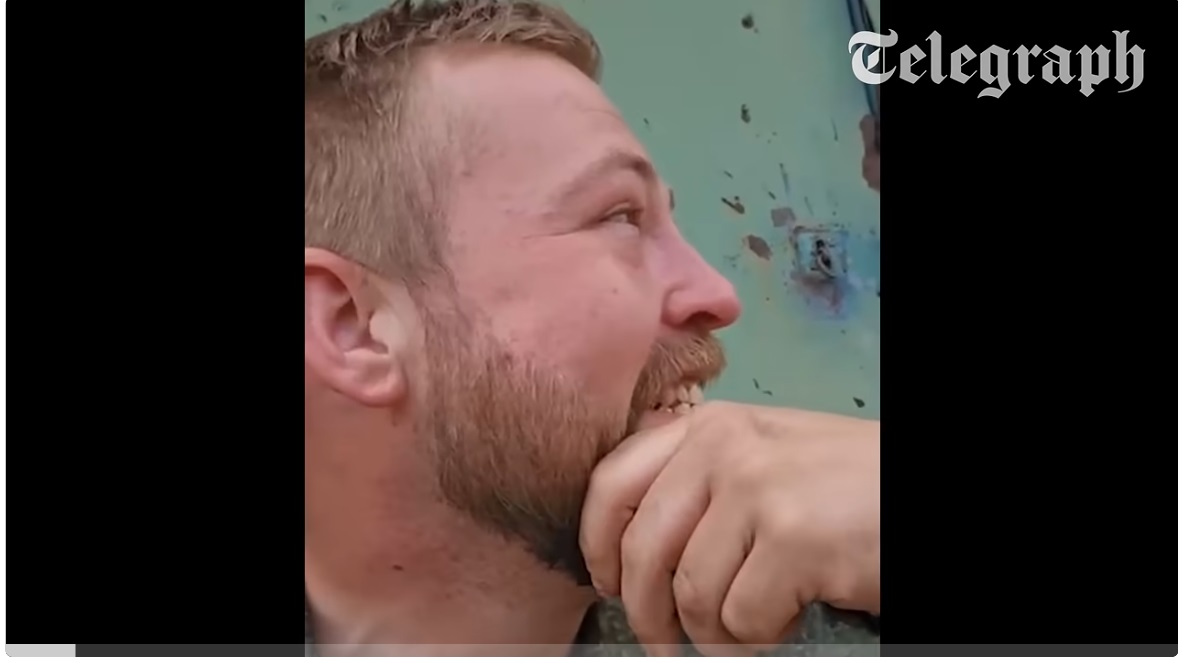
Nathan kept a brave face while sending videos
of his time in the Russian army to his loved ones
There is one video Nathan made that
Valerie has watched, and will only watch once – the film that he
left instructions should only be viewed in the event of his death.
“The goodbye video is awful,” says Valerie. “I’ve only watched it once, and I
can’t watch it any more.”
Some people reading this may want to judge Valerie for the decisions Nathan
made. Any anger or bewilderment Valerie feels about those choices has long been
overwritten by the emotional exhaustion of her search, as well as her anger and
disbelief at her treatment by the British Government. Nathan had no views about
Ukraine, she says. He’s not a soldier – he’s an electrician from Newcastle who
fell in love with a girl from Russia.
“I don’t know how they can change the legislation in Russia to force somebody to
join up or deport them. I don’t understand how they can do that to somebody. The
Russian government seems to be hell-bent on recruiting anybody they can possibly
recruit. I find myself in this bloody awful situation where my son is still
missing, and I’ve got no job because of it.”
Valerie will not stop looking for Nathan. What does she hope this article can
achieve?
“That somebody somewhere will pass it on and pass it on and say: ‘I’ve seen him,
I know where he is.’ [I hope] somebody will tell me something so I can find
him.”
A Home Office spokesman said: “We do not comment on individual employment
cases.”
Nathan was placed in an impossible situation and made a fatal error in
signing a One Year contract with the Russian army.
Valerie
Stobbart has done absolutely nothing wrong and it its
shocking to hear that
that the UK Government has terminated her employment because she publicly
sought information regarding her son.
I would urge everyone to write the the UK Prime Minister and ask
him to reinstate Valerie
Stobbart's
employment.
The Home Office's Direct Communications Unit accepts complaints
and correspondence at:
Home Office
Direct Communications Unit
2 Marsham Street
London SW1P 4DF
The Home Office also provides an online contact route. Its
complaints guidance says correspondence should explain what happened and,
importantly,
what action you want the department to take
Please
urgently review the dismissal of Valerie Stobbart and consider reinstating her
to her position within the Home Office.
Ms Stobbart was seeking information about the whereabouts and fate of her son,
Nathan, after he became missing while serving with the Russian armed forces. Her
appearance in the media was connected to that deeply personal search.
We ask that the Home Office review whether dismissal was a proportionate and
appropriate response to her conduct, whether all relevant circumstances were
properly considered, and whether reinstatement is now appropriate.
We also ask that the Home Office provide a clear explanation of the grounds for
her dismissal and the process by which she can have that decision independently
reviewed.
Please treat this as a request for an urgent review of Ms Stobbart's employment
case.
Natham Stobbart is said to have come from Newcastle
the article does not state where Valerie lives or who her MP is.